
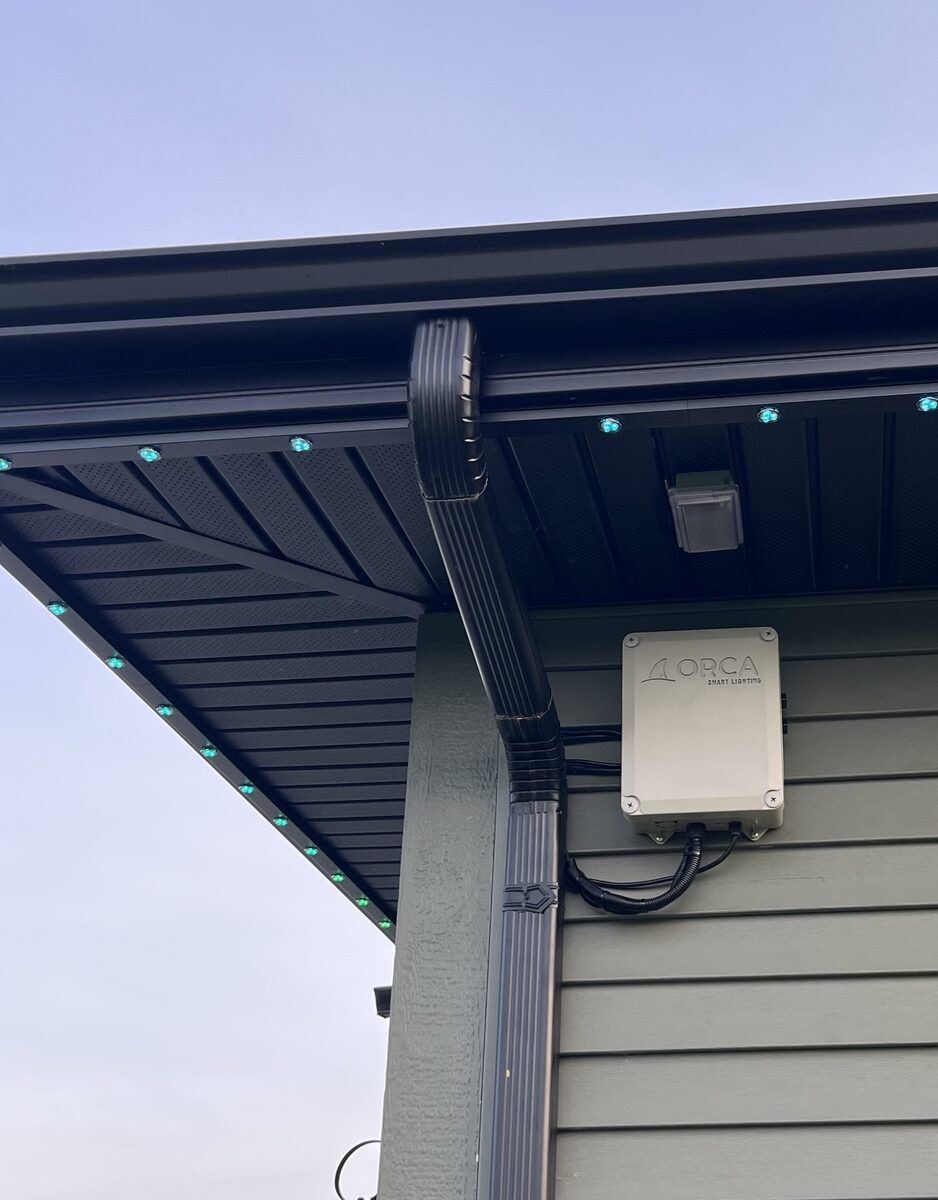
“Rated for 25 years” is on every permanent lighting brochure. Here’s what it actually means, what can shorten it, and why Illinois weather is the real test.
New to the idea? Start with our overview of permanent Christmas lights: what they are, how they look and where we install them.
What the rating covers
The 25-year figure refers to the LED modules and the aluminum track: the parts that live on your roofline through every season. Quality LEDs are rated by hours of operation before they fall to a percentage of original brightness, typically 50,000 hours or more. Run a few hours a night, that’s decades. The powder-coated aluminum channel doesn’t rust, warp or degrade in sun.
The controller is a weatherproof electronic box near an outlet. It has a long service life, and if it ever needs replacing, it’s a quick swap that doesn’t touch the roofline.
What Illinois winters do to a system
Central Illinois is a tougher test than most places. We see temperatures from below zero to the 90s, freezing rain, sliding roof snow, prairie wind and dozens of freeze-thaw cycles each winter. A permanent system handles it because of how it’s built:
- Sealed modules. Each LED is potted in a weatherproof housing with sealed connections. No exposed sockets, no water intrusion.
- No moving parts on the roof. The track is screwed to the fascia with sealed fasteners. Nothing clips on, nothing blows off, nothing ices up.
- Low voltage. The lights run on low-voltage DC from the controller, which means no high-voltage wiring on the roofline and nothing to trip a GFCI in a storm.
- UV-stable lenses. Summer sun on a south-facing eave is as hard on plastics as winter is on wire; the lenses are rated for it.
The weakest point on any outdoor system is the install. Track that isn’t sealed, connectors that aren’t weatherproofed or fascia that wasn’t solid will fail long before the lights do. That’s why we install every system ourselves and warranty the workmanship.
What shortens lifespan
- Running at full brightness every night. Most owners run warm white at 30 to 50 percent, which looks better and extends LED life. Save full brightness for holidays.
- Poor installation. Unsealed fasteners, kinked wiring and track mounted to rotten fascia.
- Power surges. A surge protector on the controller’s outlet is cheap insurance.
- Physical damage. Ladders against the track, ice dams pried loose with tools.
What a real warranty should cover
Ask any installer three questions: how long, what’s covered, and who shows up. Ours: five years, materials and workmanship, serviced by the crew that installed it. We’re a licensed installer of Orca Smart Lighting, so warranty claims go through one local company, not a manufacturer hotline.
A warranty that covers only the lights, or only labor, or that requires you to ship parts somewhere, isn’t worth much on a system attached to your roofline.
Lifespan compared to seasonal installs
A professional seasonal display uses commercial C9 lines that last many seasons with proper storage, but every strand is handled, clipped, unclipped and stored each year. A permanent system is installed once and never handled again. For a home that lights up every year, that difference adds up to a system that’s still running when seasonal lines have been replaced twice. The permanent lighting cost guide walks through the long-term math.
Bottom line
Installed correctly, a permanent system should outlast the roof it’s attached to. Our job is the “installed correctly” part, and the 5-year warranty is how we stand behind it.